Friday fictioneers – Over the chain

image

PHOTO PROMPT © CEayr

‘Step over it,’ he said, when his daughter hesitated before the chain. ‘No-one must know we’re here.’

‘But Mama-’

Her mother, leaning over her swollen belly like it was the bed she’d been longing for, said, ‘I’ll manage. Do as he says.’

The door gave way with a shove and, with another, gentler this time, the girl was inside the grey space, her nose wrinkling against some smell she couldn’t identify.
‘Bats,’ Mama said, over the chain and already on her knees in a pile of ancient straw that squeaked and rustled. ‘Pull the door closed.’ Her voice came in pants. ‘It’s almost time.’

*

If you’d like to write your own 100 word story inspired by the picture, click here, or  here to read other people’s.

Friday fictioneers -Playing the Palais

ff-prompt-17-nov

PHOTO PROMPT © Björn Rudberg

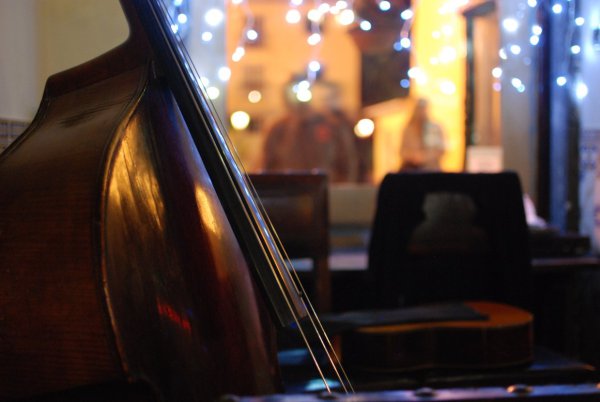
Jim played the Palais that last evening. He pressed his cheek to the neck of his double bass, the strings plotting out where his beard might one day grow, and called to the girl in the green dress who was pretending not to cry, ‘They say it’s only ’til Christmas. We’ll play again then!’

Two months later, as the damp English countryside unrolled outside a train carriage, Jim took the whisky the nurse offered. ‘Come dancing tomorrow night,’ he said. ‘I’ll be back with my bass.’

He didn’t ask her what was underneath the huge white paws at the ends of his arms.

*

If you’d like to write your own 100 word story inspired by the picture, click here, or here to read other people’s.

Friday fictioneers: Overheard

image

Image © Sandra Crook

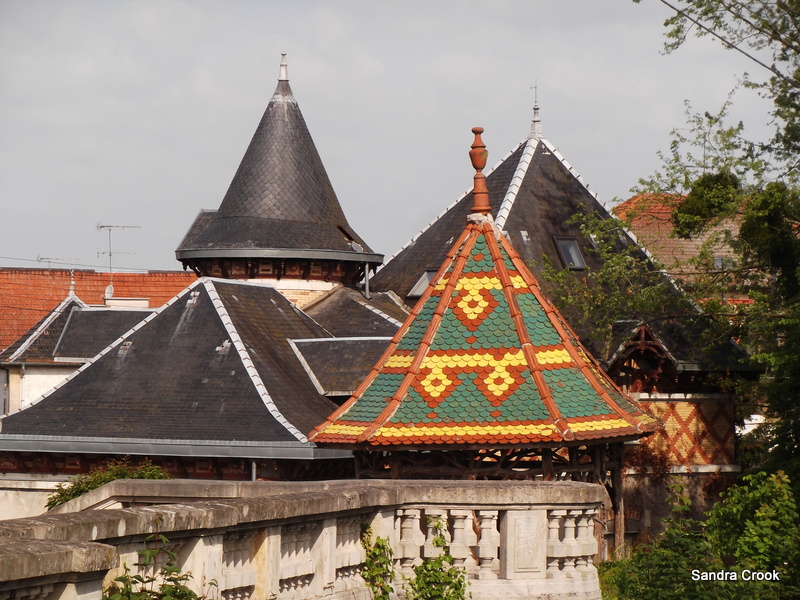
Nodding at the old lady at the next table, the woman said, in a voice that wasn’t enough of a whisper, ‘She must have been lovely when she was younger.’

The subject of her remark looked up. ‘People said similar when I was a child,’ she said. ‘Isn’t she going to be a beauty?’ She smiled, as if the memory amused her. ‘Although it never happened, thank goodness.’

The woman clutched her orange juice like it was a life preserver. ‘I’m sorry. I-‘

Over her champagne glass, the old lady shook her head. ‘Why be sorry? One stands out so much more if one looks unconventional.’

*

If you’d like to write your own 100 word story inspired by the picture, click here, or here to read other people’s.

Friday fictioneers – Off route

ff-02-11-16

Image © Jean L. Hays

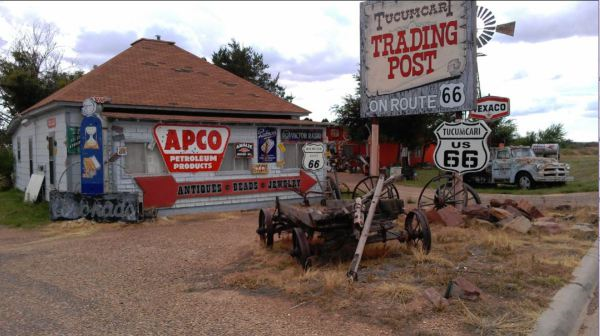
‘Has she been through here? Yesterday? In a station wagon?’ Nina flipped open her wallet and pointed at the photo of the white-haired lady. ‘She’s got Alzheimers. She shouldn’t be driving. But-’

The mechanic bent over and squinted. ‘No, but I’ve seen this dame.’ He tapped a finger, its nail rimmed with black grease, over another photo. ‘The car, too. Couldn’t forget a car like that. Yesterday, like you said.’

Nina stepped back. In the snapshot, the same woman, forty years younger, her hair still red, leaned against a Model T Ford parked under an acacia tree somewhere very far from Route 66.

*

If you’d like to write your own 100 word story inspired by the picture, click here, or here to read other people’s.

Silent Voices – Found poetry of lost women

I’m delighted to have had three poems accepted for publication as part of the Silent Voices – Found poetry of lost women project. The first poem is here, the second is here and the third is here.

The project aims to give a voice to the ordinary women of history who, for so long, have been assumed, as if by default, to have nothing interesting to say. It does so by using their own documents, whether that be public records or private writings, such as letters and diaries, and using them to make poetry. It’s a wonderful idea and the more you look at these apparently unassuming primary sources, the more apparent it is that some of the best poetry hides in the everyday and the ordinary.

The woman behind my poems is my great grandmother, Dorothy. Separated from her husband for almost four years when he was sent to fight in the Mesopotamian campaign in WWI, the pair of them wrote hundreds of letters to each other. Most of his survive; very much fewer of hers do, perhaps because of the difficulty he faced in keeping and transporting large volumes of papers.

Dorothy died relatively young, when still in her fifties, and in notes written by her son, David, the Sonny of the poems, was described as a mild-mannered woman who had a great deal to put up with.

I first “met” Dorothy through the prism of her brother-in-law, William Faulkner Taylor (see here, here, here and here). She corresponded with him for more than a year until he was killed at Passchendaele and, judging by his letters to her (to my knowledge, none of hers to him survive), was variously helpful (she had his watch fixed for him and sent him tobacco and cakes), supportive (obvious by the way he thanks her for her advice and counsel) and, purely platonically, indulgent of his need to use her as proxy girlfriend when he despaired of ever finding a real one (“Say, I hope you’re right and there is someone waiting for me and that she’s just like you.”) Nowhere, though, had I seen her voice tell her own story until I chanced on these letters.

Dorothy: it’s over to you.

The sun-drenched elsewhere: Agapanthus and Aye-Ayes in Jersey

The little boy on the aeroplane looks out of his window. ‘I can see our holiday!’ he says. For a moment, I miss my own children. Mournful at not being invited on this 40th birthday trip, they’ve requested a souvenir. I ponder the Jersey new potatoes on sale at the airport, imagining them coated with chives and butter, but I doubt they’re what the children have in mind.

In St Helier, we walk along the esplanade to the bus stop. Blue agapanthus grows liberally on World War II fortifications. If anything can beautify concrete pill boxes, it’s these flowers.

View this post on Instagram

Agapanthus on WWII fortifications in Jersey

A post shared by Louise Taylor (@sar1skatiger) on

Continuing the theme, the bus has a fake grass floor. An orang-utan swings above the driver’s seat while a kaleidoscope of tropical birds perch in the luggage racks. Birdsong and the call of howler monkeys accompany us on the journey inland. Outside, plump Jersey cows, brown as caramelised sugar, graze in small fields, roadside honesty boxes invite passers-by to have potatoes for dinner again and the garden of almost every house is alive with spikes of yet more agapanthus.

The bus deposits us at our destination: 32 acres of green loveliness celebrating and preserving Gerald Durrell’s “little brown jobs”. Durrell is an unusual zoo, not only because of its exhibits, which tend towards the less glamorous end of the zoological spectrum, but also because of its founder’s aspiration that, one day, it will no longer be needed.

Not all the animals are small. The gorillas aren’t. Everything about them is large, including their smell – like a locker room no-one’s cleaned. Even so, they attract a crowd that would thrill many sports teams.

View this post on Instagram

Western lowland silverback gorilla at #Durrell

A post shared by Louise Taylor (@sar1skatiger) on


After lunch, we browse the shop but I can’t see anything beyond the usual soft toys and plastic dinosaurs for the children so we adjourn to the aye-ayes. With their bright orange eyes and strange, elongated fingers – to winkle grubs out of bark – these lemurs are feared as omens of death in their native Madagascar. In Durrell, they’re housed in two mellow stone buildings. A woman shoves through the swinging door. ‘Can’t see anything,’ she says. ‘What’s the point of that?’

Inside, the darkness drops like a sack. It’s almost threatening – or would be without the musky smell and a dim red light I don’t at first notice. Silent, we wait, pressing our noses to the glass. There’s a shuffle and a scuffle, and then an animal with gremlin ears and a tail like a terrified cat’s passes in front of our faces. It’s only a shadow but it’s enough. It’s enough. It’s there.

Out again in the daylight, I spot a wooden collection box with a slot for coins and, beneath, what looks like a pile of sticks. There’s a notice: Bamboo chewed by an aye-aye. £1. It’s just the thing! I pick through the pile and, choice made, wrap two lengths of bamboo in a scarf and drop money into the box. I hope the children appreciate them more than they would the potatoes.

Friday Fictioneers – Sea beliefs

ff-21-10-16
Image © Claire Fuller


When I was seven, we found a mermaid. Right there on the beach, forgotten by the tide, tiny and curled up asleep inside a cockle shell. We couldn’t wake her, though we tried.

She came home with us and lived on a shelf in our bedroom, with the shells and sponges, the driftwood and sea beans. We didn’t tell anyone what she was. She was ours.

Yesterday, my daughter showed me a mermaid she’d found on the beach.

‘Look after her,’ I said and then, too quietly for anyone except the mermaid to hear, ‘while you still believe in her.’

*

If you’d like to write your own 100 word story inspired by the picture, click here, or here to read other people’s.

Friday Fictioneers – And so the darkness

Inspired by my friend, Claire, I’ve decided to have a go at the Friday Fictioneers. This is a long-running project, hosted by Rochelle Wisoff-Fields. The challenge is to write a piece of flash fiction, complete with beginning, middle and end, in 100 words or fewer, following a photo prompt. This week’s photo is supplied by Rochelle.

ff-14-10-16

Image © Rochelle Wisoff-Fields


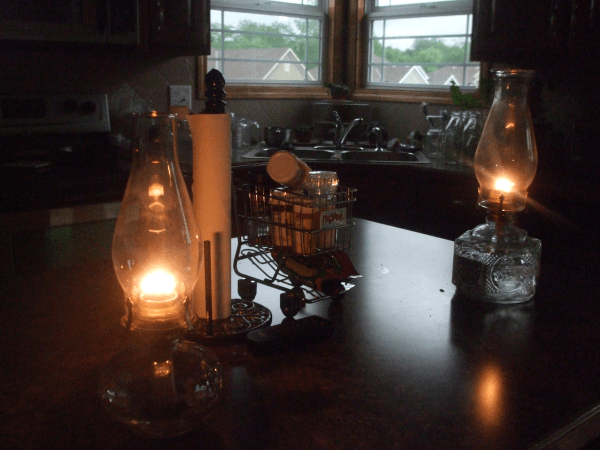
‘We have light!’ She set the hurricane lamps on the table, one either side of the tiny shopping trolley the children had filled with bottles of sugar sprinkles and cinnamon (‘See, we won’t starve,’ they’d said). ‘I found them in the attic. They were Violet’s, I suppose.’

He shrugged and ran his finger over the glass of the nearer one, liking the burn. ‘Guess so.’

‘Lucky she never threw anything away.’

His finger was too hot. He counted to five and pulled it away. ‘No. You’re wrong there. She did. She threw people away all the time.’


The sun-drenched elsewhere: Learning to fly in Mozambique

Recently I wrote a poem following one of Jo Bell’s 52 poem prompts. The prompt was “first time” and, easily discounting the obvious, I wrote about a time, almost ten years’ ago, in Mozambique’s Quirimbas Archipelago, when I found myself at the controls of a small plane. My friend Amanda, over at Amanda’s Circus, who is also following the prompts, read the poem and wanted more details. So, adapted from my diary at the time, Amanda, this is for you:
image

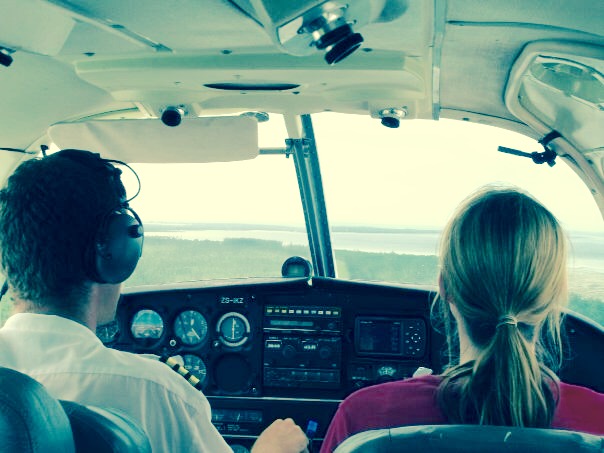
I don’t much like flying – especially not in small planes where there is so little separating one from all that empty space. This pilot, with his clipped South African accent, young man’s confident grin and long fingers picking at a plate of peri peri cashew nuts says he has the answer. What I need, apparently, is the joystick in my hand.

His plane is a Piper Cherokee, a tiny thing that might have been plucked from a toy box and dropped here, on this sandy strip of runway between the Indian Ocean and the palm trees that seal off Pemba’s old town. Somewhere out there, across the glassy water is the Quirimbas Archipelago. I wonder if I mightn’t prefer to stay in Pemba, even if it means no migratory humpbacks, turtles or dugong. But the pilot is quick to dispatch us to our places: my husband to the seat behind his; a big man with a smile that’s too small for his face, to the back; and me to the co-pilot’s seat. In front of me is a joystick which, it transpires, isn’t a joystick at all but a thing called a yoke.

The switch-flicking that comprises the pre-flight checks is followed by the roar of the engines, so loud and physical it seems to set every cell of my body vibrating. We bounce along the runway, blurring the sea to turquoise opacity. Just as it appears that we must run out of sand, the nose of the plane lifts and, halfway to vertical, the rest follows.

Levelled out again, between blue sky and green sea, the pilot lowers his visor against the glare of the sun striking the water. He twists round in his seat and assures the passengers the hardest part is behind us. The smile on the man at the back of the plane becomes rictus-like. He’s guessed what is to come and is rightly terrified. From somewhere I hear the words: put your hand on the yoke.

It thrums with the movement of the plane and resists more than I expect. Turn it to the left, I’m told. I do so and the aircraft rolls beneath us, the space that its fuselage shaded giving up two dhows, their white sails catching the same air that holds us aloft.

Below, lines of green so dark they’re almost black are the deep water channels along which the humpbacks migrate. Pushing the yoke forwards, as instructed, the darkness lurches towards us, shoving the sky out of the way. I shake my head and the pilot, still grinning, pulls back on his own yoke to lift the plane. Released, I look down at the patchwork of tiny islands Mozambique’s civil war so long kept for the cartographers. Soon one of them will resolve into the mangrove-fringed, baobab-studded bit of earth where we are to land but for now, for once, I’m happy here, suspended between sea and sky – and resolutely not at the controls.

cropped-dsc014571.jpg