The sun-drenched elsewhere: Learning to fly in Mozambique

Recently I wrote a poem following one of Jo Bell’s 52 poem prompts. The prompt was “first time” and, easily discounting the obvious, I wrote about a time, almost ten years’ ago, in Mozambique’s Quirimbas Archipelago, when I found myself at the controls of a small plane. My friend Amanda, over at Amanda’s Circus, who is also following the prompts, read the poem and wanted more details. So, adapted from my diary at the time, Amanda, this is for you:

image

I don’t much like flying – especially not in small planes where there is so little separating one from all that empty space. This pilot, with his clipped South African accent, young man’s confident grin and long fingers picking at a plate of peri peri cashew nuts says he has the answer. What I need, apparently, is the joystick in my hand.

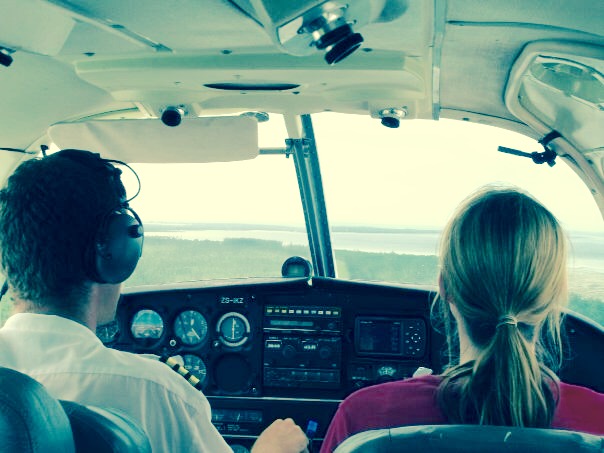
His plane is a Piper Cherokee, a tiny thing that might have been plucked from a toy box and dropped here, on this sandy strip of runway between the Indian Ocean and the palm trees that seal off Pemba’s old town. Somewhere out there, across the glassy water is the Quirimbas Archipelago. I wonder if I mightn’t prefer to stay in Pemba, even if it means no migratory humpbacks, turtles or dugong. But the pilot is quick to dispatch us to our places: my husband to the seat behind his; a big man with a smile that’s too small for his face, to the back; and me to the co-pilot’s seat. In front of me is a joystick which, it transpires, isn’t a joystick at all but a thing called a yoke.

The switch-flicking that comprises the pre-flight checks is followed by the roar of the engines, so loud and physical it seems to set every cell of my body vibrating. We bounce along the runway, blurring the sea to turquoise opacity. Just as it appears that we must run out of sand, the nose of the plane lifts and, halfway to vertical, the rest follows.

Levelled out again, between blue sky and green sea, the pilot lowers his visor against the glare of the sun striking the water. He twists round in his seat and assures the passengers the hardest part is behind us. The smile on the man at the back of the plane becomes rictus-like. He’s guessed what is to come and is rightly terrified. From somewhere I hear the words: put your hand on the yoke.

It thrums with the movement of the plane and resists more than I expect. Turn it to the left, I’m told. I do so and the aircraft rolls beneath us, the space that its fuselage shaded giving up two dhows, their white sails catching the same air that holds us aloft.

Below, lines of green so dark they’re almost black are the deep water channels along which the humpbacks migrate. Pushing the yoke forwards, as instructed, the darkness lurches towards us, shoving the sky out of the way. I shake my head and the pilot, still grinning, pulls back on his own yoke to lift the plane. Released, I look down at the patchwork of tiny islands Mozambique’s civil war so long kept for the cartographers. Soon one of them will resolve into the mangrove-fringed, baobab-studded bit of earth where we are to land but for now, for once, I’m happy here, suspended between sea and sky – and resolutely not at the controls.

cropped-dsc014571.jpg

William Faulkner Taylor – part 2

Born in 1890 in Leicester, William Faulkner Taylor was the second son of William and Emilie. In 1906, the whole family apart from the eldest son, George (usually known by his middle name of Harold), emigrated to Canada. They settled in the prairie town of Senlac, Saskatchewan and established themselves as farmers. Ten years’ later in 1916, William Faulkner Taylor, now 26 years’ old, enlisted with the 46th Battalion of the Canadian Infantry (Saskatchewan Regiment) and set sail for England. By August, after a few weeks in a training camp in Hampshire, he was on his way across the Channel. I’ve already posted one of the first letters he sent “home”, to his brother, Harold, in England. However Harold was soon also to enlist – in the Royal Engineers – and William began writing instead to Dorothy, his sister-in-law.

Belgium, August 29th

“Dear Dorothy,

Just a few lines to let you know that I am alright, we came out of the trenches last night, after an eight days [sic] stay there, we have been to the trenches twice now the first time we were only there for two days, we are out behind the lines now in a rest camp for a little while. It was fairly quiet while we were in the trenches all but one day & then it was rather interesting for a while. Fritz kept us busy dodging a few things that the boys call rum jars but I didn’t think there was much rum about them. I got a letter from Sis the other day & one from her intended & I got one from Laura since I have been over here. Tell granddad I will write to him soon & tell Harold to send me his address will you, well I think this is all now so good by

Will”


Sis, more properly known as Frances, and Laura, were Bill’s sisters, back home in Canada. This is the only letter, at least that I have, in which Bill signs himself “Will”. Maybe I’m being fanciful but it’s tempting to imagine the young man who had so recently exchanged the green prairies of Canada for the devastated, shell-swept farmland of northern Europe trying out a new nickname to fit his new reality.

France, Sep 25/16

“Dear Dorothy,

                        I received your welcome letter last week, just about half an hour after I posted that last letter to you. Well we are in a different part of the country now, we were on the march the last three days of last week & we are away from the trenches now, we are billeted in a little village, this is a fine country & all the people around here are fine, different altogether to where we were before. You were pretty lucky to be able to go & stay close to Harold it would be quite a holiday. Well Dorothy I want you to do something for me if you will please, I am enclosing a ten shilling note & I would like you to get me two dozen Gillett safety razor blades & send them to me as soon as you can, we never get into a big enough place to be able to get them over here. I think this is all now so good bye

                                                                                                                        Bill

PS You asked me what kind of tobacco I smoke so that you could send me some, thanks very much but I get all the smokes that I can use mother sent me some & we get issued every week with tobacco [sic] & cigarettes, but I wouldn’t mind if you would send me a cake or something like that.”


France,

Dec 6 / 16

“Dear Dorothy,

This is the first time I have had a chance to write to thank you for the pipe  & watch. I got them about ten days ago. When we got them we were living up to our knees in mud, but we are alright now, we have been on the march for eight days & we are billeted now in a small town quite a way from the trenches & believe me it’s great to be back in something like civilisation again. We were just seven weeks on the Somme & I don’t want to go there again.

Well Dorothy, that pipe you sent me is a dandy, I couldn’t have got one to suit me better if I had picked it myself & the watch is doing fine, so I am very much obliged to you. I am going around town tonight to see if I can’t get you an Xmas present.

We were all going to get leave, we heard, about a week ago. One man out of our section did go, & now we hear today that it is cancelled, so I am afraid I won’t be able to see those three girls, that’s tough luck, eh what.

Tell Harold when you write to him that he hasn’t reached the limit yet by a long way, sleeping in a wagon under a tarpaulin is quite comfortable to what he will get when he gets over here.

I don’t know what’s happened to the mail. I haven’t heard from home for three weeks, but I might get some letters any time now that we are settled for a few days.

My chum got badly wounded the last afternoon we were in the trenches, he was only about two yards from me when a bullet hit him, went in his shoulder & out through his back. It broke his collar bone & his lungs were touched. I haven’t heard anything about him yet whether he lived or not. He was a Sheffield boy.

Well I think this is all this time so I will close with love

Bill

PS A merry Xmas & a happy new year.

I have just been around town trying to find something to send to you & I couldn’t find anything just to suit me. I wanted to get a silk apron but they were all sold out so I decided to buy you enough silk goods to make a blouse. I hope you will like it, I had some time around town in the shops. I went into quite a few before I got suited. You ought to have seen some of the things those girls fetched out for me to look at. At last I found a place where the girl could sling a little English& there was a fellow with me that could sling a little French so we got on fine & this silk is what she persuaded me to buy.

I have just had a letter from Harold & one from mother. All the folks at home are quite well. Mother says she hasn’t heard from you for a long time. Well this is all now. Good by dear.

Bill” 


France Dec 11/16

“Dear Dorothy,

Got your letter yesterday, & posted one to you the day before, as usual. Some lecture you gave me, but don’t worry dear I’ll be good. Say I hope you are right about someone waiting for me & I hope she is just like you.

Bill”

The short note above was written inside a hand-stitched Christmas card. I can’t imagine where he got it from or how he kept it safe. And I wish I knew the history behind these three sentences.

One hundred years’ on: poppies, the Battle of the Somme & William Faulkner Taylor


On Friday I was dog-walking on the chalk fields around my home. At their fringes, where the farmer has left off with his sprays, the oil seed rape is woven with grasses, small scabious, bird’s foot trefoil – and poppies. I stopped and photographed them, and thought of one soldier in particular: my great-great uncle, William Faulkner Taylor, who had arrived from Canada almost exactly 100 years’ earlier, at the end of June 1916. He’d pitched up not so very far from me, in a training camp in Bramshott, Hampshire, to await his passage to France. He didn’t yet know it but the Somme was to be his bloody baptism.
“July 2nd 1916

Dear Harold,

I arrived in England last Thursday. I have been hoping to be able to come up to see you before we go to France, but the Colonel told us this morning at church parade that it was impossible to grant any leave at all because they want to rush us through & get us ready to go to France sometime in August, he said the only passes that he could give us were from noon on Saturday until ten o’clock on Sunday night & that wouldn’t be any use at all. I went home for a day before we left Canada & everybody was quite well when I was there, we left Saskatoon on the 12 of June. We were inspected yesterday by the King about 8 miles from here & believe me it was some march with a full pack after doing nothing but sit around for nearly 3 weeks, we were away at 6 in the morning & didn’t get back until six at night & were pretty tired boys. Have you enlisted yet or what are you doing, I suppose this letter will find you if you are not at home, I have been wondering if you have enlisted and are by any chance camped anywhere around here, if so we could arrange to see one another somewhere. Well, I think this is all now I will write again as soon as I hear from you.

Your dearly beloved little chip, Bill”

Eight days

Eight days’ ago, my writing “to do” list looked something like this:

-Refine elevator pitch for The Gardener’s Boy

-Rewrite synopsis

-Tailor cover letter to agents

-Wait for kind beta readers to return said novel covered in corrections and suggestions

-Catch up on the last three poems for the “52 poems project”

-Write travel piece on flying a light aeroplane in Mozambique

What I’ve actually achieved is more like:

-Flood Facebook and Twitter with dozens of incredulous/furious/sorrowful posts about, yes, Brexit

-Shout at the television and radio

-Read everything I could find on why why goddamnit why this has happened and where we might go next other than hell in a handcart

-Talk until my jaw stopped working to everyone I know who shares my stupefied horror.

And that last point is becoming the crux for me. I happen to live in one of the very few places in England which returned a majority remain vote. Most of my friends are remainers. Likewise, bar one person, so are my family and in-laws. I also spent over a decade working at an international law firm. Its clients – largely from the financial sector, FTSE 100 and comparable foreign-listed companies – tended to be international in set-up and global in outlook. We had offices in over a dozen countries and I was fortunate enough to spend time in France, Germany, Belgium, the Netherlands, Italy, Spain and Ireland as part of my job. I made friends from all over Europe, some of whom are still very dear to me. And I ended up feeling very European. It is as much a part of my identity – maybe even a little more so right now – as my Britishness. Learning that my legal identity as a European is to be removed feels rather like bereavement: the disbelief, the growing anger and first-thing-to-greet-me-in-the-morning sorrow is uncanny in its similarity.

With an EU-focussed jobs, as mine was, I learned a good deal about how that sprawling, gargantuan organisation works. I am aware of how desperately it needs reforming in some aspects. I am also aware of how much of a force for good it is. I discounted half the headlines I caught sight of, particularly if they were in The Sun: everything from wonky bananas to EU legislation not being scrutinised by the UK Parliament before being adopted. I had an idea of just how much money was ploughed into deprived regions of the UK such as the Welsh Valleys, Cornwall and, yes, Sunderland. I knew just how much our financial services’ sector – our main export nowadays, for want of a better description – relies on being able to operate across EU markets thanks to the “passporting” scheme. I understood that in these days of increasing globalisation, more and more countries are forming trading blocs and that trying to negotiate with one of these as a single state might be a little like chucking someone down a crevasse and expecting them to haul themselves up again with no rope or crampons.

I can’t remember not seeing the risibility in the argument that Britain was just fine and dandy before the EU and so could be again. Hark back 120 years and we were riding on the bowed shoulders of an empire that rightly no longer exists but that, while it did, supplied us with low cost raw materials while we, in turn, forced them to buy our manufactured goods at prices that suited us better than them. Moving forward a little further, were the two world wars, both of which had their genesis in Europe. Quite aside from the human cost, those wars left us, and the rest of Europe, financially devastated. Once aid from the US-funded Marshall Plan stopped in 1952, it was still a long haul back into the black. Thankfully we had a strong manufacturing and mining industry. That’s all gone now, driven to obsoletion by lower priced competition from developing nations. And here’s the bit I let my London-centric, left-leaning, liberal, all-friends-together bubble blind me to: all those devastated communities, whose jobs and hope seeped away as mine after mine and factory after factory closed did not feel the same as me about what the EU had given them. Why should they? In what way did their lives bear any similarity to mine? Angry, bitter and increasingly disenfranchised by a political system that never fails to look after its own, who should be surprised that millions of those people voted out last week? It was the first chance they’d had to have a voice and to make that voice count – even if they were shouting the wrong way and at the wrong people.

The immigration issue that appears to have exercised so many people is too depressing to spill many words over. But this “fear of the other” that is apparently so entrenched in so many communities and that people seemed to have misunderstood, or been denied the information to help them understand, that the free trade they so desire to keep is, according to the current rules governing the EEA and EFTA, entirely unachievable without free movement of labour – the one thing that is abhorred above all else – makes me feel a sick stranger in what its supposed to be my own country. I am furious with the disingenuous, self-serving leave campaign that not only failed to deliver the facts but that flooded its recipients with hopeful lies. And I’m starting to find fury with the remain campaign, with myself, for not finding some better way of explaining all of this, with making some attempt to engage those people who felt they no longer mattered.

So we are where we are. And, frankly, it’s as if the grown-ups have gone away for good and left us to re-enact our very own Lord of the Flies. The Government exists in name only, prominent Leave supporters are falling over themselves to knife each other in the back, one individual who decimated our education and prison systems and spent years telling us “I can’t be leader, I’d be no good, I can’t be leader” is now asking his party to elect him, and the opposition is rapidly turning itself into a cult. No wonder the Irish embassy has just asked eligible UK citizens to hold off applying for passports as its systems shook under the weight of applications already received. No wonder China is holding us up as an example of why democracy does not work.

Where now? Where now? There has to be something beyond posting memes on Facebook, signing petitions and worrying over our children’s future. Who is going to show us what that is?
260 days in the country

There are some things about living in the country in the winter that I now know you really have to live to understand. One is the mud. It’s not so bad when it’s frozen, other than when the children slip over on it, of course (filthy clothes and cuts and scrapes) but in its normal state it’s gone straight into my room 101. Child 2 has lost wellies to it, the dogs, even after much grooming, have acquired interestingly freckled abdomens and I have taken to identifying the cars of other country-dwellers by the levels of dirt on their vehicles. Previously I was slightly thin-lipped about why you wouldn’t take better care of such an expensive item; now, I quite understand the impulse to do no more than wipe clean the number plates and windscreens. Takings at Tesco’s car wash might be down but I am at least four pints up per month at the village pub – or I would be had said pub not just closed.

Inside the house, Child 1 stuffs cotton wool inside his ears each time I remind him please not to run up the stairs in muddy trainers, my kitchen cupboards have tidemarks so impressive I’m considering whether they have any artistic merit and the radiator behind Dog 1’s crate needs the dried dirt chipping off only the day after I spent forty-five minutes engaged on the same task. After considerable experimentation I have discovered that biological washing powder and bleach works best on the (textured cream) stone floor in kitchen and utility room. Sadly, the septic tank doesn’t like either of these much so most of the time it’s bicarbonate of soda, a splash of Zofresh and a scrubbing brush that has a disingenuous habit of slipping sideways out from underneath my hand.

Another thing is the cold. It’s mildly perplexing that a gas bill that disappears monthly or quarterly from a bank account was barely noticed. A tank of LPG in the garden, however, is something to watch and hoard and mutter happy self-congratulatory sounds over when yet another month passes without the dial dipping into the red. Meanwhile, we spend more than we care to count on seasoned logs for the wood burning stove while simultaneously convincing ourselves that the pile of wood pruned from the apple trees should save us, oh, at least the cost of two slankets next winter.

Unit 72, Birkenhead Market


I wasn’t the sort of child who went dribbly-mouthed and frantically bothersome outside a sweet shop. Stand me in front of a bookshop, however, and there was no peace for anyone until I’d emptied my purse into its till. I’m still rather like that now, particularly where second-hand bookshops are concerned. And, for that, I credit one particular place: Unit 72, Birkenhead Market.

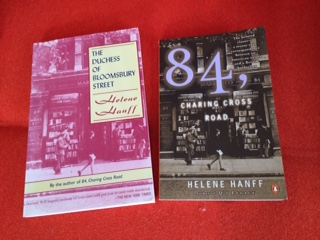
It’s been more than two decades since I went there – in fact, I don’t suppose it even exists anymore – but I thought of it the other day when I reread Helene Hanff’s wonderful 84, Charing Cross Road. Hanff, a martini-loving, cigarette-smoking, New York dweller, was a playwright and screenwriter who found by far her greatest success in later life when she published a book of her correspondence with a London bookshop, Marks & Co. The shop specialised in acquiring second-hand books, particularly from the sales and clearances that increased so rapidly in number after the Second World War (WWII) as the owners of many of the UK’s largest houses admitted financial defeat and sold off their possessions along with their bricks and mortar.

One person’s loss was another’s gain, and Hanff, whose formal education did not extend beyond high school, was a lifelong self-educator with a particular passion for English literature. Although even some of the more obscure titles she ordered by post from Marks & Co could doubtless have been obtained in New York, she would buy her books from nowhere else: “The books arrived safely, the Stevenson is so fine it embarrasses my orange-crate bookshelves…I never knew a book could be such a joy to the touch.” Through her correspondence first with Frank Doel, the chief buyer for the shop, and then with other staff members too, she became closely involved with their lives. For several years after WWII she sent them food parcels (“My little ones…were in Heaven – with the raisins and egg I was actually able to make them a cake!”) and they reciprocated with a beautiful hand-made Irish linen tablecloth and repeated invitations to please visit them in London.

There was little Hanff wanted more than to visit the “London of English literature” but she was stymied repeatedly by financial constraints, poor health and also, one senses, a fear of travel. For more than two decades her explorations happened solely through the pages of the books she ordered from Marks & Co. When Frank Doel died suddenly following a ruptured appendix, Hanff was motivated to ask his widow, Nora, if she could publish a volume of their correspondence. And so 84, Charing Cross Road, the book, was born.

Published by Andre Deutsch, it gave her both plaudits and money.  At long last one of the barriers preventing her from crossing the Atlantic was blown away. And so, with a case of newly purchased clothes, including a dress – “silk, chic and expensive…intended to cover large evenings” – and a growing sense of trepidation that had kept her from sleeping the night before, she found herself on a plane. The result of her ensuing six week stay in London is recorded in her book The Duchess of Bloomsbury Street (currently out of print in the UK but due to be rereleased in July 2016).

“All my life I’ve wanted to see London. I used to go to English movies just to look at streets with houses like those [on Bedford Square]…I wanted to see London the way old people want to see home before they die.”

I was living in London when I first read this book – living in London, slightly jaded by its dirt, its cost of living, its crowds and the quietly terrifying sense of threat that pervaded the place after 9/11. The Duchess of Bloomsbury Street seized me by the scruff of my surprised neck and reminded me of all that was good about London and how much I too had once wanted to be there. Mine was the crowded, crawling streets of the Medieval city; the flash and dangerous opulence of Henry VIII’s time; the oh-so desirable salons of the Bloomsbury Set; the West London streets set with large white houses with pillared entrances and chequerboard steps; and St Pauls-the-Phoenix. Hers was Bloomsbury, Russell Square, Regents Park, St Pauls, Westminster Cathedral and Shakespeare Shakespeare Shakespeare. More than that, though, she opened her arms and her heart to the modern day city, and it to her.

I don’t think she ever made a repeat visit but I’m not sure she needed to. I don’t live in London anymore but if I need reminding of what I did come to love about the city I only have to read her books. Her places were not necessarily mine but her words fill me with the sense of how books open doors figuratively and, sometimes, literally. Unit 72, Birkenhead Market once did that for me, too. It’s where I joined the Chalet School, tried out a US Californian high school, travelled the world with Gerald Durrell, set my cap at becoming a Yorkshire vet, stomped across Egdon Heath and wept over the fate of those luckless last few in “On the Beach”. I still have almost all of the books I bought from Unit 72 – only those that I knew I’d never want to read again or actually fell apart have been, reluctantly, retired – and I still read most of them, now and then. Some people (my husband!) say life is too short and there are too many good books to read one more than once. It’s a valid point but I’m with Helene Hanff here: like clothes that I wear many, many times, I reread my books again and again. Why would I not when they take me to so many places I’ll never visit any other way?

books             Hanff

Enjoying a vibrant writing life

My writers’ group is lucky enough to be involved in 10 days – Winchester, a biennial, interdisciplinary arts festival supported by organisations such as Arts Council England, Hampshire County Council and Winchester City Council. The aim is to bring together artists of many different types, provide them with the opportunity to showcase their work – in Winchester Cathedral, the City Museum and the Discovery Centre – and to engage the public, both creatively and perhaps also by making them look at their city in a new way.

The theme is Chalk – and cities don’t get chalkier than Winchester. Dig down anywhere in this ancient capital of old England and its environs and you’ll find lumps of the stuff studding the topsoil. Keep burrowing and you’ll find chalk bedrock. Thanks to the filtration qualities of the chalk in the riverbed,  the tributaries of our river, the Itchen, are transparent as the most precious diamonds and provide the ideal habitat for water voles, otters and white-clawed crayfish.  Chalk imbues our buildings, our streets, the graves we bury our dead in, our whole history. It’s a huge subject.

Last night the writers involved – those from my writing group and another local group – came together to decide which of the several pieces each of us had written would be showcased in the various venues. We then moved on to discuss several different public engagement activities. One of these, due to include crowd-pulling speakers, raised particular concerns. It wasn’t that we couldn’t find interesting – and successful – literary people who’d be willing to speak; it was that we weren’t offering anything different from the myriad of other talks and conferences held locally on how to get published, how to secure an agent, why Mr X wrote the book he did and what made Ms Y persist with hers in the face of a full-time job and multiple rejections. That’s not to say these are not valuable topics to hear about because of course they are.  However, we wanted something different: something for all those writers for whom publication is never going to happen for whatever reason and also for those mid-way along the journey, who might want new ideas to keep them going, to validate what they do and support who they are. This resulted in the idea, put forward by the director of the Winchester Writers’ Festival, that we discuss (and it will be a discussion rather than speeches) how to have  a vibrant writing life – and celebrate it. Of course, this might include publication but it might also mean thinking about what else is available locally to stimulate your writing. Yes, we’ll have interesting, successful and well-known writers on the programme but hopefully they will be able to approach the event in a different frame of mind from other similar ones and to inspire in listeners the sense that the world is full of possibilities, big and small. And what, after all, is more important to any writer – indeed, at times, to any person – than inspiration and possibility.

Chalk, it seems, runs deeper than the bedrock.

For more details about the collaboration between the Hyde and Taverners writers’ groups for 10 days – Winchester, please check out our website. There’s an opportunity to send in your own work (flash fiction or poems of 200 words or less) or a chalk moment to feature on the website. (NB You don’t have to be from Winchester to do so!)

On What is Lost

The beauty and genius of a work of art may yet be reconceived, though its first material expression be destroyed; a vanished harmony may yet again inspire the composer, but when the last individual of a race of living things breathes no more, another heaven and another earth must pass before such a one can be again. C. William Beebee

William Beebee was the David Attenborough of the early twentieth century. Ornithologist, explorer and trail-blazing conservationist, he led dozens of expeditions for the New York Zoological Society and the American Museum of Natural History and, in the early 1930s, spellbound wireless listeners with his bathysphere broadcast from half a mile down in the ocean, describing never-before-seen fish and other marine life beyond most people’s craziest sci-fi dreams.

I came across Beebee through the quotation at the top of this blog, which Gerald Durrell used at the front of one of his books. Durrell’s ashes now rest at Jersey Zoo beneath a stone inscribed with the same quotation. They are words that, from my first reading of them, have resounded with each beat of my heart. They are words that I cannot believe do not inspire a sad sort of panic in anyone who hears them. I thought of them last week when I read about the disappearance of Tanzania’s elephants. Aerial surveys in 2013 and 2014 confirmed that Tanzania has lost two-thirds of its elephant population in only four years. First the Selous, then the Ruaha and soon, perhaps, the Serengeti. These aren’t subsistence poachers – impoverished farmers or disgruntled locals pushed out to make a “better” national park experience for dollar-rich tourists – or even haphazardly-organised gangs. No, these are criminal syndicates based in faraway Dar-es-Salaam and divided into “teams”, responsible respectively for scouting the animals, killing them, butchering their remains and, finally, transporting what they came for: ivory.

Immense amounts of money still resides in ivory (just as with rhino horn, tiger bone, turtle shells and shahtoosh among others). We can blame China and the childlike belief of many of its residents of the cancer-curing, penis-stiffening, blood-warming properties of ivory et al all we like – and maybe we should do so. However, we must not forget also to look much closer to our comfortable Western homes to find the cavalier lack of respect that characterises so many of our dealings with all those millions and millions of creatures with whom we share our earth.

Take “Cecil”, the Zimbabwean lion, reportedly illegally lured from his reserve, shot with a bow and arrow and then pursued for the 40 hours it took him to die before he was finished off by a gun. And the killer? A dentist from Minnesota already so in love with hunting for hunting’s sake that he’s under a probation order for his inexactitude over precisely where a black bear was killed in Wisconsin in 2006. But it’s not only him; it’s every bystander too: the applauding ones, the silent ones, even the ones who turn their back in a show of caring. After all, this is a man whose online presence showing him posing with a slaughtered rhino and a slain leopard apparently caused no more disquiet among his friends and associates than, say, a change to his golf handicap or a significant birthday. If such activities are deemed normal – whether grudgingly or not – then where is the impetus for change?

I’ve read things today suggesting that neither Cecil nor this gun-loving dentist deserve the publicity they’ve received. Apparently I should be more concerned with the nameless, numberless dead in the DRC and Syria or with the hundreds of thousands of children being lowered further into Dickensian life by our Dear Leaders and their “we’re all in this together” philosophy. And I am concerned. Of course I am. But that doesn’t mean that I can’t also care about the fate of Tanzania’s elephants and “Cecil” the lion. To me, each feeds into the other. To be properly human is to care about anything that once gone is forever lost, whether that’s a population of elephants, an individual lion, the childhood and improved life-chances of a country’s children or civilians wiped out in conflicts they didn’t start and can’t finish. William Beebee spoke sense. There’s no rewind button. What a pity we can’t see it.

On sharks and children

Today is the 40th anniversary of the release of Jaws, the movie. Rarely can a film have entered into the collective psyche in the way that this one did. I can’t remember when I first saw it although I do remember when I first didn’t. It was shown on television here when I was a very small child of four or five. I came home from school the following day highly indignant because my teacher had asked the class who had stayed up to watch it. Apparently – or so I interpreted it – mine was one of the very few hands not to be raised. Of course I made up for it in years to come, watching the films (all of them) and reading the book. Perhaps that’s why the spectre of sharks has never been far from my mind when swimming in seas and oceans as geographically, biologically and climatically diverse as the Irish sea, the Mediterranean and the Indian ocean. Older people tell me it didn’t used to be that way. ‘Sharks?’ I recall a great-uncle saying. ‘No, you might worry about sharks if you were torpedoed [he was in the Merchant Navy in WWII] but not at the beach. Never at the beach.’ I did though – and a cousin and I used to spend goodly portions of our Easter holidays in that well-known shark mecca, the Lleyn Peninsula, committing to heart the tragedy on every page of a luridly-illustrated book entitled something like “Shark Attack!” that we’d picked up for 50 pence in the discount bookshop in Portmadoc. Needless to say, any large marine creatures in Cardigan Bay remained prudently elusive.

My children still haven’t seen any of the Jaws films (yes, my five year-old self would be disgusted with me) but the idea of sharks as Something Bad and Dangerous is sewn into their consciousness. I realised as much three or so years ago at a tearoom in Orkney’s Bay of Birsay. ‘There was a pod of orcas out there last month,’ the waitress said, as she put her tray down. My four-year son and niece squabbling over turns of the binoculars in front of the picture windows either did not hear her or, more probably, orca meant nothing to them. My two-year old daughter, however, with eyes fixed firmly on the cakes, tried out the new word. ‘Orca?’ she said.

The waitress smiled, wiped her hands on her apron, and went over to a small display of postcards next to the homemade jams. She put one glossy card on the table. ‘Here,’ she said, pointing to the impossibly smooth curve of black and white back. ‘This is an orca. It’s also called a killer whale although, really, it’s a dolphin’. With wide, interested eyes, my daughter looked up and nodded as if she understood. Then she frowned and looked down again. She jabbed her finger against three tall triangular fins that broke the surface of the water around the orca’s back. ‘Sharks,’ she said, unhappily. ‘There are no sharks in the swimming pool.’ We adults nodded in hearty agreement. ‘Sometimes in the sea,’ I began, before sensing the need for a change of tack. ‘But these aren’t sharks. They’re orcas. And you needn’t worry; this sea is far too cold for swimming.’

The storm that had sent us hurrying along the coast away from Skara Brae had subsided. Wind-driven sea-spray still misted the tearoom’s windows but the seaweed on the shore outside no longer tossed its rubbery green tentacles from side to side like long-haired headbangers at a heavy metal concert. The water – so recently a foaming cauldron with sea birds expertly piloting the wind above it – was grey and almost glassy, and the birds now rode its surface, easy as paper ships on a boating pond. A slice of sun poked out coyly from behind a cloud to coax diamond chips of light from the sea. The children at the window were sufficiently entranced not to notice the plate of cakes on the table behind them. Still clad in now slightly steaming waterproofs, they’d reached some sort of accord as to who had which pair of binoculars. No matter that one was looking through the wrong end; they were happy and quiet. We ate our cakes and drank our tea. I wondered how many times I would need to return before I saw an orca. The four year-olds shrieked simultaneously. Several small balls were bobbing closer to shore before resolving themselves into large grey animals that humped fatly out of the water and onto a narrow spit of sand. One rolled onto its side and waved a celebratory flipper at the sun. I stared at the seals, thinking them fair compensation for the lack of orcas. My daughter looked at them before shaking her head a little sadly. ‘Sharks,’ she said.

On words and ears and why I write

One of the questions every writer faces sooner or later is, ‘Why am I doing this?’ Plenty of us tell ourselves, oh, I write for myself; it doesn’t matter if anyone else reads it but if this isn’t exactly a lie, it’s perhaps only a half-truth. Very little makes me admire a writer more than when they stand up to be counted, so to speak, and admit that, actually, they write to be read. Interestingly, I’ve noticed that it tends to be published – and often very successfully so – writers who are brave enough to say as much out loud (although perhaps this is because these writers have less fear of people pointing and laughing or, worse, ignoring them altogether).

Of course traditional print media is not the only way for writers to be heard. Oral storytelling is far older than the written word and, while it has rather lost its place in the western world, it has its successors. Mind you, some forms of writing lend themselves rather better to oral performance than others. Few people would sit through a recital of even a novella but a play is another matter. And the long history of poetry recital is increasingly being supplemented with flash fiction. Years ago I engaged in the quaint-sounding pursuit of “Speech and Drama”, which mostly consisted of reciting – from memory and with appropriate theatrics – a variety of poetry. As a somewhat melancholic teen, I spent far too much time perfecting my performance of several of Sylvia Plath’s “Ariel” collection. It did gain me a Poetry Society gold medal for spoken poetry after a performance at the Central School of Speech and Drama, during which my grandmother had an angina attack (hopefully unconnected), and also prompted me to plough onwards with my own highly derivative poetry collection (long since consigned to the loft for future generations to squirm uncomfortably over or rats and pigeons to use as nesting material).

The idea of performing my own materials in public had not really occurred to me until a friend of mine – a published novelist – reminded me that it was doing readings of her short stories at the local library that pushed her onwards with her creative writing several years ago now. When that same library, in Winchester, started to host an evening called “Loose Muse“, I read the promotional materials with interest. Started in 2005 by Agnes Meadows, Loose Muse, whose home venue is London’s Poetry Café, aims to provide a supportive environment for women writers of all genres to come together, share their work and learn from each other. As well as providing an opportunity for new and upcoming writers, it also showcases more established ones. For example, I was delighted to hear the award-winning poet Rhian Edwards perform (ukulele and all) and subsequently to enjoy the Family Matters tour, performed by the poet/writers Agnes Meadows, Patricia Foster, Janett Plummer and, in absentia, Linda Shanovitch.

I actually only intended to go along as moral support for a friend who’d been asked to perform one of her comedic short stories in the guest slot but she persuaded me to take along one of my poems in case there was space in the “open mic” slots at the end of the evening. There was – and I read “At Pine Ridge”, published last year in Synaesthesia magazine. The second time I went, I was braver and read something new that I have yet to submit anywhere. It got positive feedback, which has encouraged me to think about to where I might send it but, more importantly, it sparked a conversation among several of the people sitting near me. It’s a poem about early motherhood and everyone near me, including the 80 year-old lady who’d read a magnificent ballad about Queen Eleanor, had something to say or to recall on the topic. It’s a good feeling when something you’ve written engages so many other people and makes what I said in my first sentence above seem only a quarter-truth. Perhaps, after all, writing to spark a reaction in others is what counts…..